


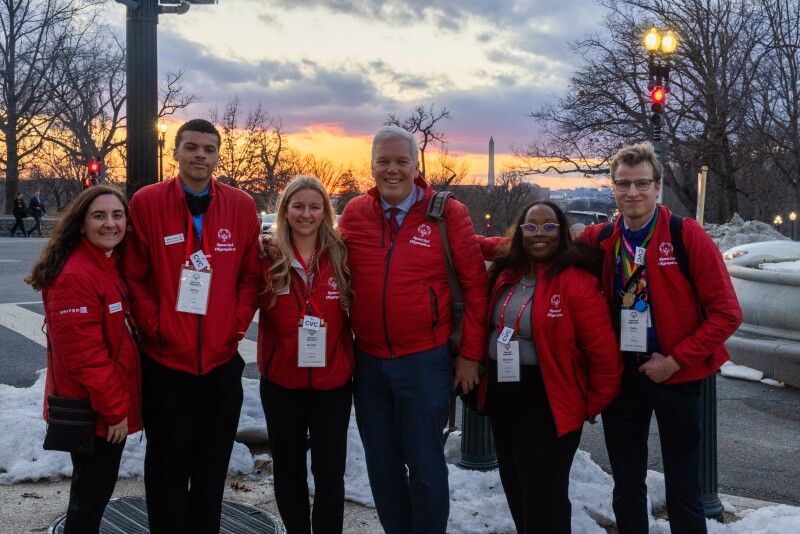
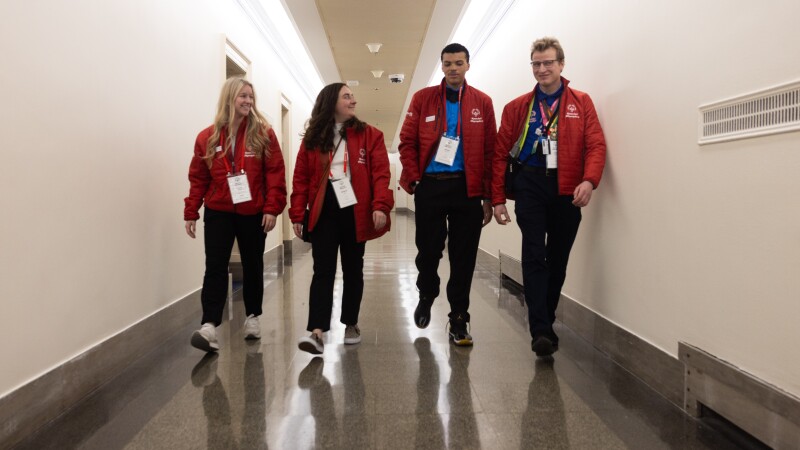
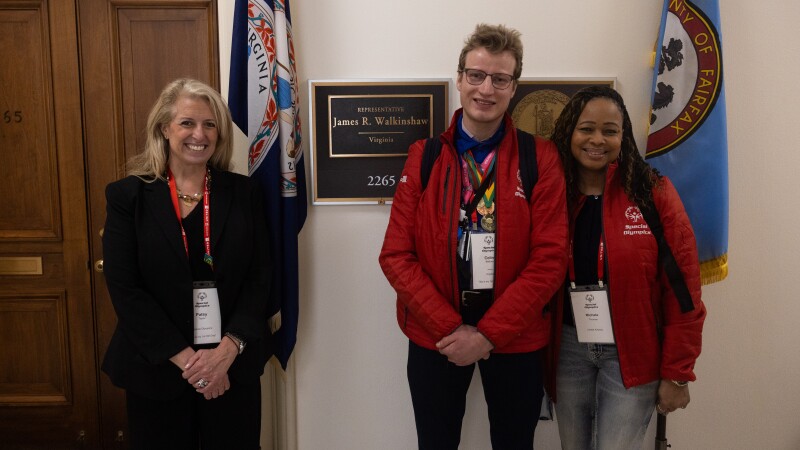
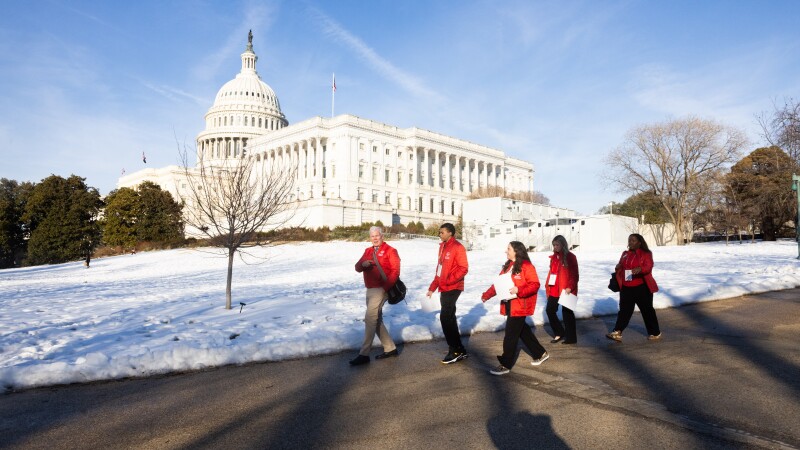
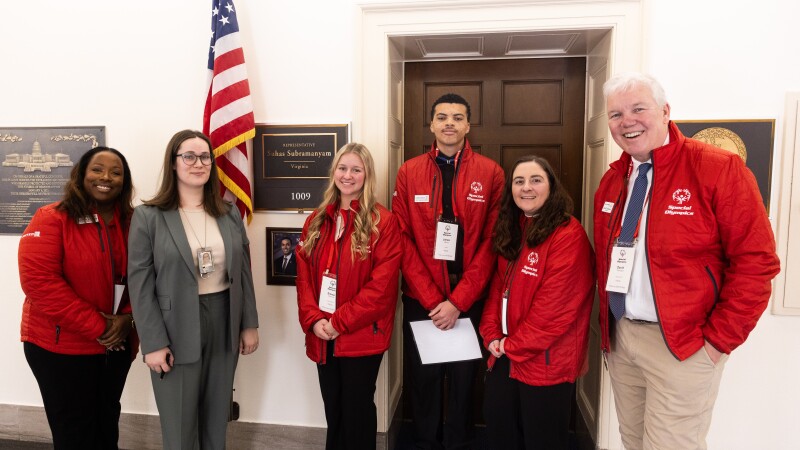
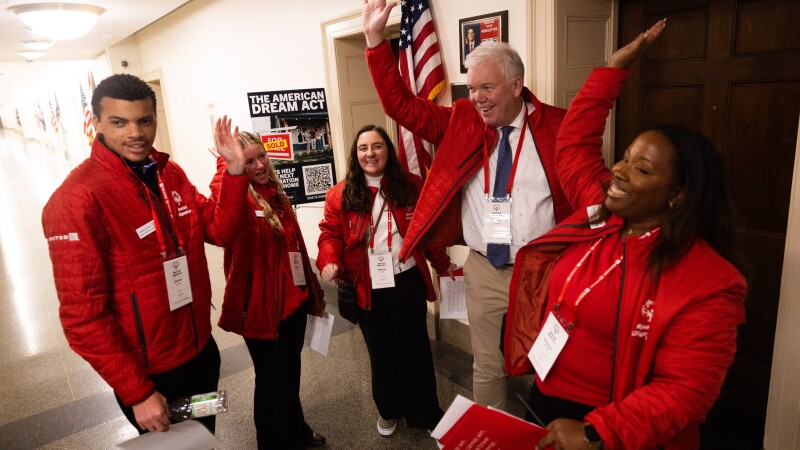
WASHINGTON, D.C. — February 6, 2026 — Delegates from 47 states and the District of Columbia, including athletes, program leaders, Unified Sports® partners, and family members from Special Olympics Virginia, traveled to Washington, D.C. to advocate for people with intellectual disabilities (ID) during Special Olympics’ 22nd annual Capitol Hill Day, held February 9–11.
- Tim Kaine
- Mark Warner
- Jen Kiggans
- Bobby Scott
- Jennifer McClellan
- John McGuire
- Ben Cline
- Eugene Vindman
- Don Beyer
- Morgan Griffith
- Suhas Subramanyam
- James Walkinshaw
- Rob Wittman
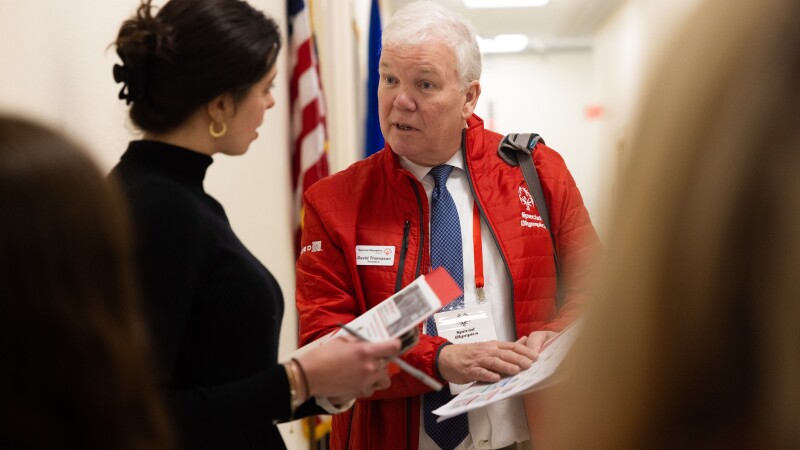
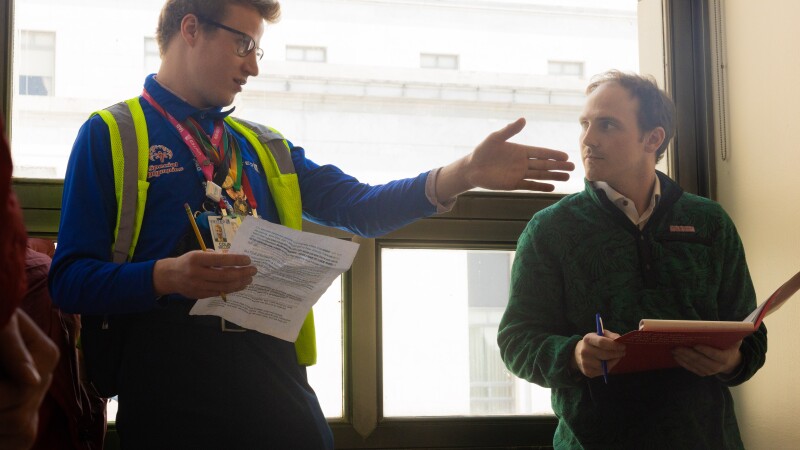
Capitol Hill Day brings Special Olympics athletes together as self-advocates, empowering them to share their lived experiences directly with federal lawmakers. Through face-to-face meetings with Members of Congress in both the U.S. House of Representatives and the U.S. Senate, athletes and leaders advocated for continued federal investment in Special Olympics Unified Champion Schools® and inclusive health programming.
Throughout the event, athletes educated legislators and their staff about the real-world impact of stigma, exclusion, and health disparities faced by people with intellectual disabilities, and how Special Olympics’ evidence-based programs provide proven, cost-effective solutions that strengthen schools, healthcare systems, and communities nationwide.
Virginia Delegation Advocacy Impact
Special Olympics athletes helped lead more than 250 congressional meetings nationwide, calling on lawmakers to partner with them to:
- Expand Unified Champion Schools®, now active in more than 8,300 schools nationwide
- Support inclusive education that reduces bullying and discrimination
- Address longstanding health disparities through free screenings and provider training
- Ensure continued access to follow-up care for people with intellectual disabilities
Meet the Team
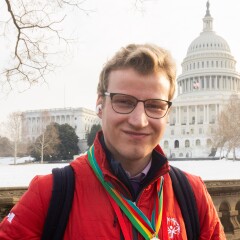
Colin Bellows
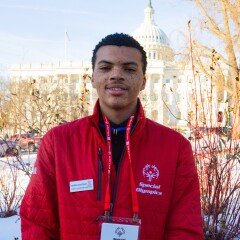
James Decruz
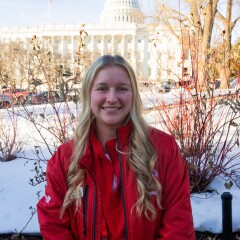
Emma Michnya
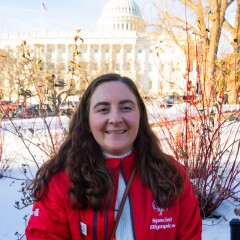
Helene Leigh
Liberty High School
Champions Together Program
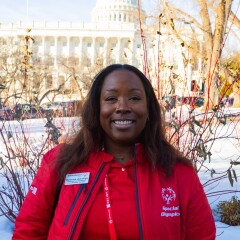
Veronica Jennings
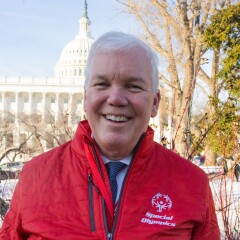
David Thomason
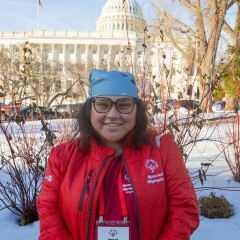
Mariela Monterrosa Rodriguez
Virginia Voices on Capitol Hill
Members of the Virginia delegation shared firsthand perspectives on how inclusive programs have shaped their lives, schools, and communities.
Colin Bellows, a Special Olympics athlete and graduate of George Mason University’s Mason Life Program, spoke about the importance of employment and opportunity. Now working in customer service at Washington Dulles International Airport and serving as a Special Olympics Ambassador, Colin emphasized that inclusion benefits everyone.
America is better when we include everyone and give everyone a fair chance. When people with intellectual disabilities have real jobs, we show up, we work hard, and we help our teams succeed.
Emma Michnya, a Unified partner and student leader at Liberty High School, highlighted how Champions Together fosters leadership, empathy, and responsibility among students.
Being part of Special Olympics, specifically through my school’s Champions Together program, has played a huge role in shaping me into a stronger and more confident leader. Working with athletes taught me how to lead with patience and empathy while taking responsibility when others are counting on me.
James DaCruz, a senior Unified Athlete Partner at Liberty High School, shared how Unified Champion Schools transformed his high school experience.
As an athlete, Unified Champion Schools has allowed me to become a better leader. UCS has made me more confident.
Helene Leigh, a Champions Together educator, explained how Unified Champion Schools has changed school culture.
The funding provided has had an impact not only on our students with intellectual disabilities, but on our school as a whole. It has offered leadership opportunities to a wide range of students, many of whom would not otherwise be part of a leadership team. UCS has truly changed the culture of our school. Parents tell us they love Champions Together because it gives everyone a place. We’ve seen less bullying, and students are more supportive of one another.
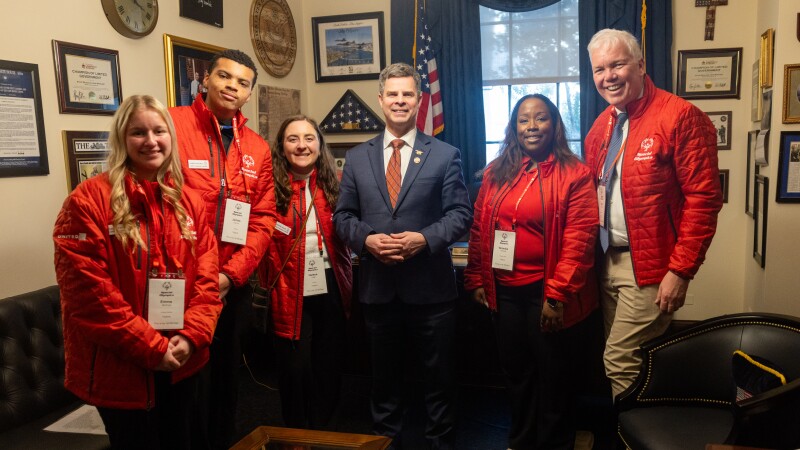
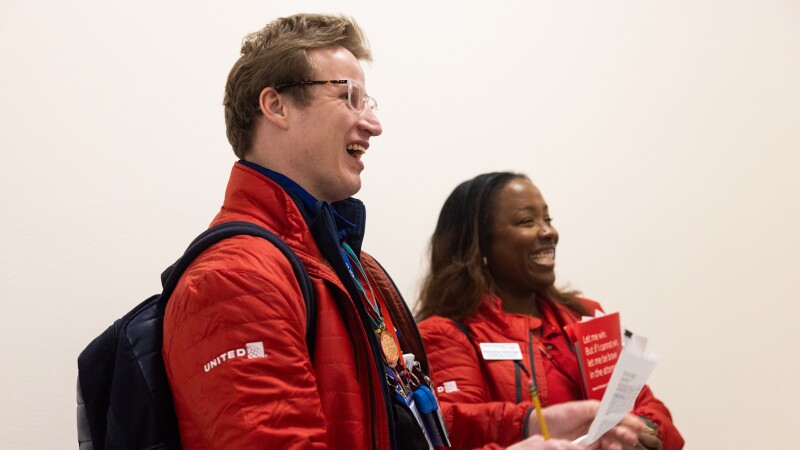
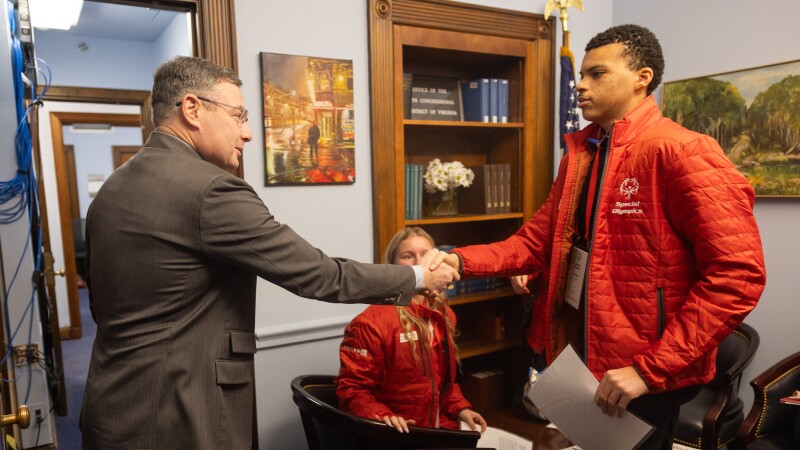
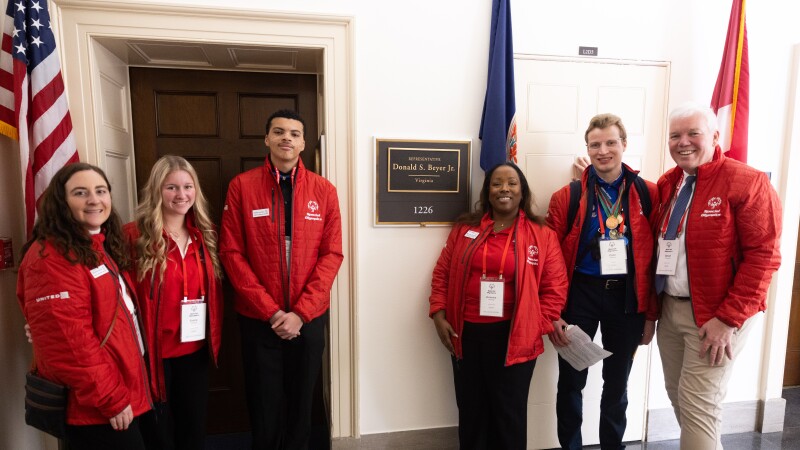
See all the photos: Link to Photos
Why Federal Support Matters
Federal funding plays a critical role in sustaining Special Olympics education and health initiatives at no cost to participants.
Special Olympics Unified Champion Schools® programming trains and mobilizes educators and youth leaders to foster inclusive school environments by integrating students with and without intellectual disabilities through sports, clubs, and leadership opportunities. These programs reduce stigma, increase acceptance, and strengthen school culture nationwide.
Special Olympics health programming works to ensure people with intellectual disabilities have access to high-quality, affordable healthcare and the resources needed to make informed health decisions.
The impact is clear:
- Special Olympics athletes experience 31% fewer healthcare visits compared to peers with ID who do not participate
- Young adults with ID involved in Special Olympics are half as likely to be diagnosed with depression
- Participation in fitness programming leads to measurable improvements in blood pressure and cardiovascular health
- Children in Young Athletes programs show significant motor skill improvements within months
Public and private support is essential to sustaining these programs and ensuring individuals with intellectual disabilities can thrive in school, health, and community settings.
Capitol Hill Day remains one of the most impactful self-advocacy opportunities for Special Olympics athletes. By sharing their stories directly with policymakers, athletes help ensure that decisions about education, health, and opportunity are informed by lived experience.